
The medical community makes a lot of money off of epidurals, c-sections, and induced labor. They’ve been trained to minimize legal risk. While doctors and nurses do care for the patient, a lot of the time, there’s an overlap in what they believe is best for the patient and her birthing experience.
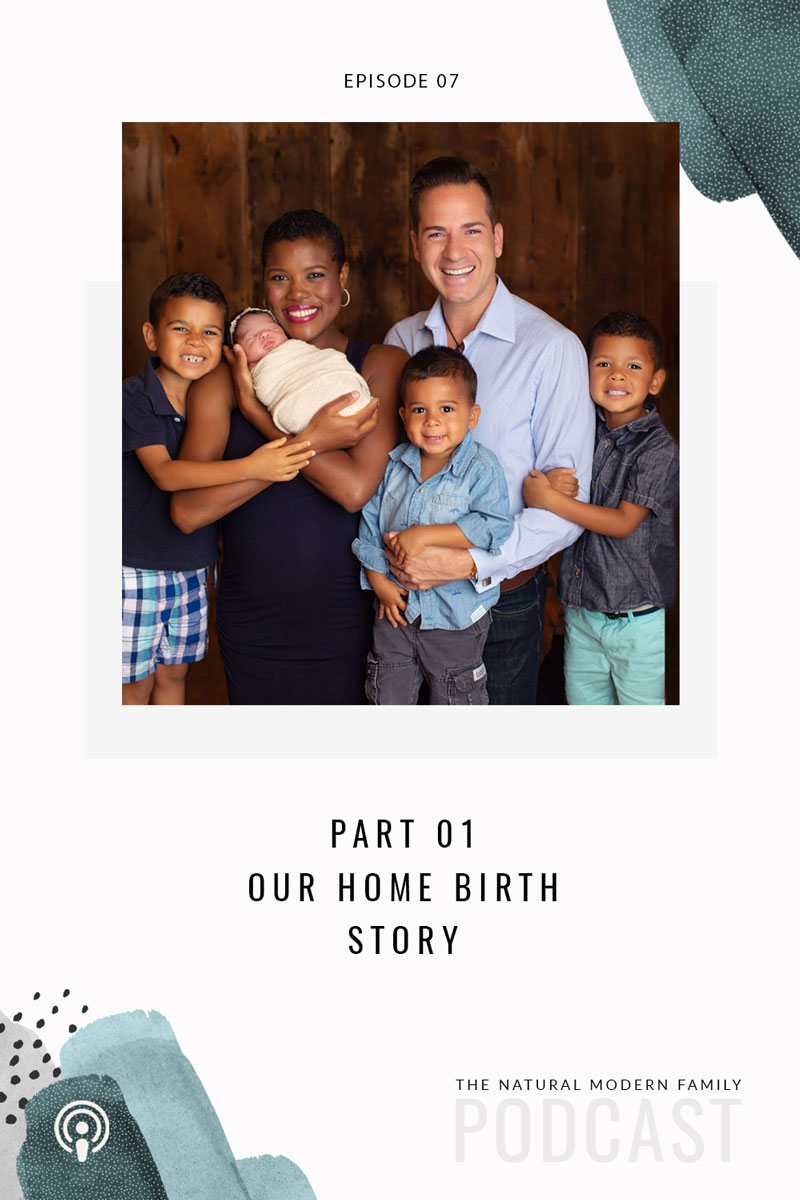
In this part 1 of 2 episodes, we’re talking about our home birth story with our baby girl Eliana. We’ve home birthed all four of our babies and have had incredible, magical experiences. But I didn’t always think I would have my babies at home. When initially thinking about home birth, I had two fears: what if there is an emergency and I need to be at the hospital and what if the pain is too much.
After researching, reading, and watching documentaries, I began to feel empowered by the idea of having my babies naturally, in the comfort of my own home.
I realized that in many other countries like Holland, home birth is the norm…not the exception. In places like Holland, compared to the US, the infant mortality rates and maternity mortality rates are astounding. How is it that in the US (the number one spender on healthcare in the world) is also the number one country in infant mortality rates?
In this episode, we’re hoping to encourage and inspire both women and men to look at their options surrounding birth. Whatever you choose as your birth option is your choice, and there is no shame around where or how you choose to have your child. It’s all about helping you feel empowered in your decision.
We talk about using natural strategies for breech babies, how prodromal labor can be a good thing, how homebirth may be shorter than hospital birth, and more.
Every woman goes through that moment of “I can’t do this” during child labor. But here’s the thing: you can do this. You were born to do this. You are capable.

READ the Latest
Articles
Health Habits
Longevity
Health Habits
One Comment