

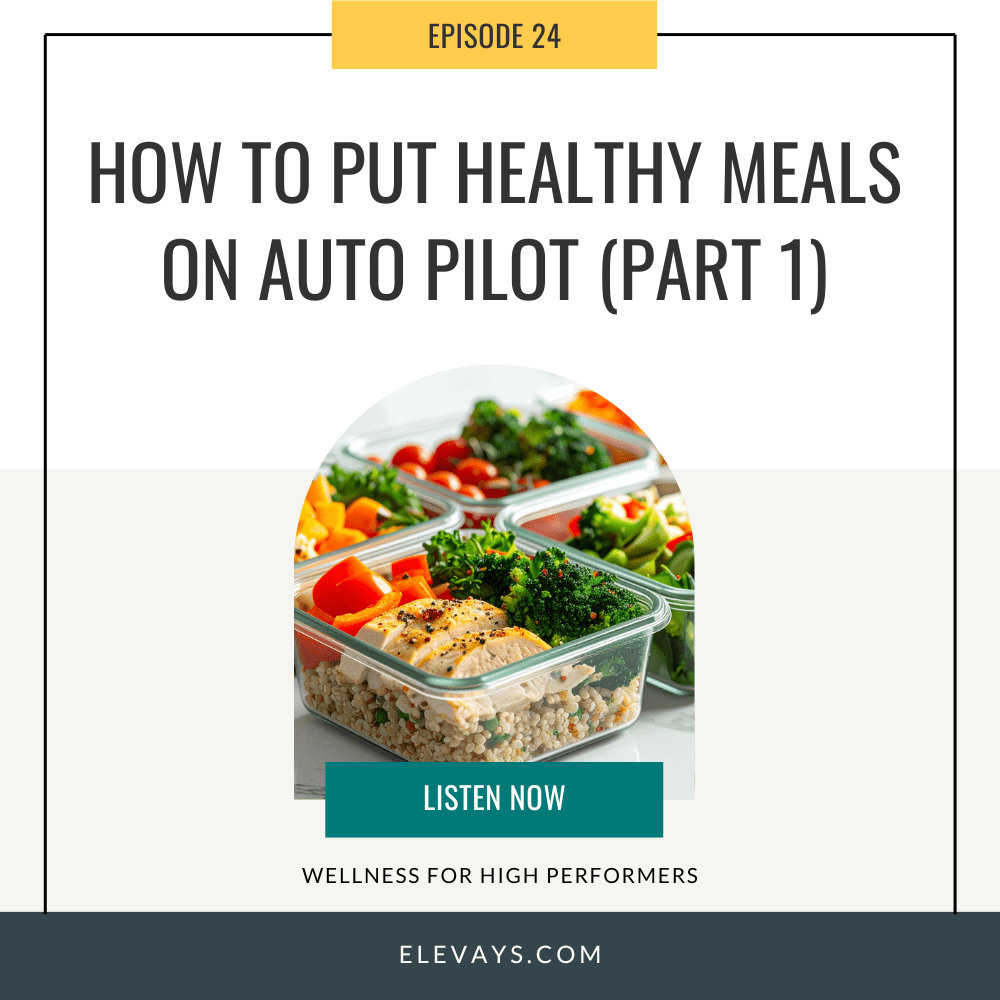
If healthy eating feels like another exhausting decision on your never-ending to-do list, you’re not alone. One of the biggest hidden drains on high performers is the constant mental load around food — what to make, what to buy, and how to feed yourself or your family without defaulting to stress, overwhelm, or takeout. Creating simple systems around meals is one of the most effective wellness habits for reducing decision fatigue and supporting sustainable wellness.
In this episode, I’m sharing the practical strategies I use to put healthy meals on auto-pilot so nutrition feels supportive instead of stressful. From meal planning systems to kitchen organization and simplifying weeknight cooking, these habits help create more consistency, energy, and ease in everyday life without turning wellness into another full-time job.
As high performers, we often underestimate how much mental bandwidth is consumed by repetitive daily decisions. Food is one of those areas where a little structure can dramatically improve stress resilience, energy optimization, and overall wellbeing. The goal isn’t perfection — it’s creating systems that make healthy routines easier to maintain consistently.
GET the HIGH BANDWIDTH NEWSLETTER
for HIGH PERFORMING WOMEN
A weekly inspiration email for women who want real strategies for pursuing their passions without letting go of themselves or what they value most.
I also talk about the balance between practicality and creativity in the kitchen. I love food and cooking, but I’ve learned that there’s a difference between cooking for efficiency during a busy week and cooking for enjoyment when life has more space. Sustainable wellness often comes from simplifying what doesn’t need to be complicated.
In this episode, we’ll cover:
- How to reduce decision fatigue with repeatable meal systems
- Why simple healthy routines support high performer wellness
- Practical meal planning strategies that save time and mental energy
- How to stock your kitchen for easier weeknight meals
- The role of systems and structure in sustainable wellness
The reality is that wellness becomes far more sustainable when it’s built into your life instead of competing with it. Simple systems around food can free up mental capacity, reduce stress, and make it easier to consistently nourish yourself and your family — even during busy seasons. Healthy habits don’t need to feel rigid or overwhelming to support long-term energy and performance.

READ the Latest
Articles
Health Habits
Longevity
Health Habits